Welcome to Kidneys Made Easy, a special summer blog series from the National Kidney Foundation of Michigan. Throughout the summer, we’ll break down kidney health topics into simple, easy-to-understand information that can help you better understand your health and the important role your kidneys play in your body.

Missed the first two Kidneys Made Easy blogs? Catch up on the series and learn what your kidneys do and what chronic kidney disease (CKD) is.

→ Read Blog #1: What Do Your Kidneys Actually Do?

→ Read Blog #2: What Is Chronic Kidney Disease (CKD)?

WHO IS AT RISK FOR KIDNEY DISEASE?

Last month, we learned about chronic kidney disease (CKD), what causes it, and how it is diagnosed. This month, we’re looking at another important question: Who is at risk?

Anyone can get kidney disease, but certain factors can put you at a higher risk. In fact, 1 in 3 adults in the United States is at risk for kidney disease.

Knowing your risk can help you take steps to protect your kidneys and talk with your healthcare provider about whether you should get tested.

WHAT CAN INCREASE YOUR RISK?

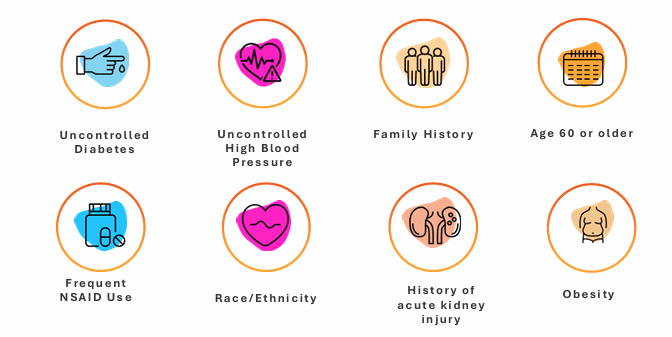
Some of the main risk factors for kidney disease include:

Diabetes

Diabetes is a major risk factor for kidney disease. Over time, high blood sugar can damage your kidneys. Keeping your blood sugar under control can help lower your risk.

Learn more about diabetes: Diabetes | National Kidney Foundation of Michigan

High Blood Pressure

High blood pressure is another major risk factor. When your blood pressure stays high, it can damage the blood vessels in your kidneys and make it harder for them to work properly.

Learn more about high blood pressure: High Blood Pressure | National Kidney Foundation of Michigan 

Family History

Kidney disease can run in families. If you have a family history of kidney disease, it’s important to let your healthcare provider know and talk with them about your kidney health.

Age

Your risk for kidney disease increases as you get older. Adults age 60 or older are at increased risk, especially when other risk factors are present.

Frequent NSAID Use

Some common pain medicines can damage your kidneys. These include nonsteroidal anti-inflammatory drugs, or NSAIDs, such as aspirin, ibuprofen (Advil® or Motrin®), and naproxen (Aleve®).

Talk with your healthcare provider about how to safely use these medications, especially if you already have other risk factors for kidney disease.

Other Risk Factors

Other factors that may increase your risk include:

  • Obesity
  • A history of acute kidney injury (AKI)
  • Heart or cardiovascular disease
  • Smoking
  • An abnormal kidney structure
  • Race and ethnicity

Kidney disease is more common in some racial and ethnic groups, including African American, Hispanic, Native American, and Asian American populations. Learn more about the groups more at risk for kidney disease: Who Can Get Kidney Disease? | National Kidney Foundation of Michigan.

Having one or more of these risk factors does not mean that you have kidney disease. It means it’s especially important to know your risk and pay attention to your kidney health.
With 1 in 3 adults at risk for kidney disease, you may be wondering where you stand.

Take the National Kidney Foundation’s one-minute Kidney Risk Quiz to learn if you may be at risk for developing kidney disease.

What Should You Do If You're at Risk?

If you have one or more risk factors, talk with your healthcare provider about your kidney health and whether you should get tested.

As we learned in the last Kidneys Made Easy blog, two tests can help check your kidney health:

  • eGFR: a blood test that shows how well your kidneys filter your blood. Learn more about eGFR on our Kidney Disease page.
  • uACR: a urine test that checks for protein in your urine, which may be a sign of kidney damage. Learn more about uACR and kidney disease stages on our Kidney Disease page.

Early detection is important because finding and treating kidney disease early can help slow or stop its progression.

Anyone can develop kidney disease, but knowing your risk factors can help you take action.

Learn your family health history, understand your personal risk factors, and talk with your healthcare provider about kidney testing if you’re at increased risk. Want to learn more about kidney disease risk factors? Visit our Disease and Prevention page.

Next Month in Kidneys Made Easy: How Can You Protect Your Kidneys?

We’ll share simple steps you can take to help lower your risk and protect your kidney health, including managing blood pressure and blood sugar, eating healthy, staying active, quitting smoking, and being careful with certain pain medicines.