
Welcome to Kidneys Made Easy, a special summer blog series from the National Kidney Foundation of Michigan. Throughout the summer, we’ll break down kidney health topics into simple, easy-to-understand information that can help you better understand your health and the important role your kidneys play in your body.
KIDNEYS MADE EASY 2: WHAT IS CHRONIC KIDNEY DISEASE (CKD)?

Last month, we learned about the important jobs your kidneys do every day. But what happens when your kidneys become damaged?

That’s where chronic kidney disease (CKD) comes in. Chronic kidney disease (CKD) is permanent kidney damage or a decrease in kidney function that lasts for three months or longer. Healthy kidneys filter waste and extra fluid from your blood. When they become damaged, waste and fluid can build up in your body over time.

CKD is more common than many people realize. In fact, 1 in 7 adults has kidney disease, and about 90% of people with kidney disease don’t know they have it. That’s because kidney disease often develops slowly and usually doesn’t cause symptoms in its early stages.

Visit our Kidney Disease page for more information.

WHAT CAUSES CHRONIC KIDNEY DISEASE?

There are many different types of kidney disease, but the most common causes of CKD are:

DIABETES

High blood sugar can damage the tiny blood vessels in your kidneys over time, making it harder for them to filter your blood.

Visit our Diabetes page for more information.

HIGH BLOOD PRESSURE (HBP)

High blood pressure puts extra strain on your kidneys. If it isn’t controlled, it can damage your kidneys and increase your risk of kidney disease.

Some people also develop kidney disease because of inherited conditions, diseases they are born with, or other medical conditions.

Visit our Hypertension page for more information.

WHY IS CKD OFTEN CALLED A "SILENT DISEASE"?

One of the biggest challenges with CKD is that most people don’t have symptoms when the disease first begins.

You may feel completely healthy while kidney damage is already happening.

As kidney disease progresses, some people may notice symptoms like:

  • Swelling in the hands, feet, or around the eyes
  • Changes in urination
  • Feeling tired or weak

Because symptoms often don’t appear until later stages, testing is the best way to detect kidney disease early.

HOW IS CKD DIAGNOSED?

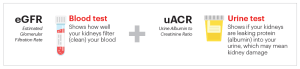
Healthcare providers use two simple tests to better understand your kidney health.

Together, these two tests give your healthcare provider the clearest picture of your kidney health. If you’re at risk for kidney disease, ask your healthcare provider about getting both tests.

eGFR BLOOD TEST

The estimated glomerular filtration rate (eGFR) is a blood test that shows how well your kidneys are filtering waste from your blood.

A lower eGFR may mean your kidneys aren’t filtering as well as they should.

Learn more about eGFR on our Kidney Disease page.

uACR URINE TEST

The urine albumin-to-creatinine ratio (uACR) is a urine test that checks whether your kidneys are leaking a protein called albumin.

Healthy kidneys keep albumin in your bloodstream. If albumin is found in your urine, it may be an early sign of kidney damage.

Learn more about uACR and kidney disease stages on our Kidney Disease page.

WHY EARLY DETECTION MATTERS

Finding kidney disease early can make a big difference. Early treatment and healthy lifestyle changes can help slow the progression of CKD and help protect your kidney function.

If you have diabetes, high blood pressure, or a family history of kidney disease, talk with your healthcare provider about your kidney health and whether kidney testing is right for you.

Want to Learn More?

Wondering what the different stages of CKD mean? Watch this short video from the National Kidney Foundation to learn how healthcare providers use eGFR to determine the stages of chronic kidney disease. Kidney Disease Prevention and Management | CKD Heat Map | NKF


THE BOTTOM LINE

Chronic kidney disease is common, but many people don’t know they have it because it often develops without symptoms.

Learning what CKD is, understanding what causes it, and talking with your healthcare provider about kidney testing are important first steps toward protecting your kidney health. Learn more about chronic kidney disease on our Kidney Disease page.

Next Month in Kidneys Made Easy: Who Is at Risk for Kidney Disease?

We’ll explain the most common risk factors for kidney disease and what you can do to help protect your kidneys.