Being diagnosed with chronic kidney disease (CKD) can feel overwhelming, but the National Kidney Foundation of Michigan is here for you. There are steps you can take to understand your condition, protect your kidney health, and feel more in control.
Where to Start




What is CKD?
 Chronic kidney disease (CKD) is permanent kidney damage or a decreased level of kidney function that continues for three months or more. Damage is caused when the kidneys cannot filter blood properly, causing waste and fluid to build up in the body. When left untreated, CKD can lead to complete kidney failure. CKD increases your risk of heart disease, stroke, anemia, and uncontrolled blood pressure and blood sugar levels.
There are many types of kidney diseases, each with different causes and effects on the body. Non-preventable kidney diseases are those that are inherited, genetic, or present at birth. Preventable kidney disease is caused by lifestyle factors. Diabetes and high blood pressure are leading causes of kidney failure in the US. Visit our Diabetes and Hypertension page for more information.
To learn more about kidneys, risk factors for CKD, and symptoms, visit our Kidney Disease page.
Understanding Your Test Results
Understanding your kidney disease is key to making informed decisions about your health. Each diagnosis and stage of kidney disease is different, and your care depends on your specific situation. Being informed can help you and your healthcare team create a treatment plan, explore testing options, and take steps to protect your health.
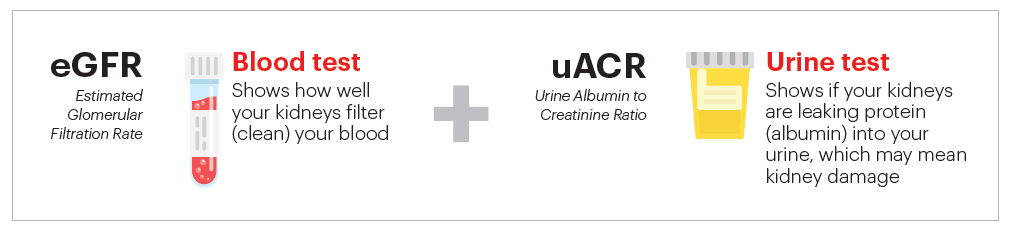
Regular testing is key to understanding your diagnosis, preventing complications, and slowing progression. There are two common tests, and both are needed to understand your kidney health:
Estimated Glomerular Filtration Rate (eGFR)
The estimated glomerular filtration rate (eGFR) is a simple blood test that helps doctors see how well your kidneys are filtering out a waste product called creatinine. Doctors use the eGFR to check how well your kidneys are working, and your results determines your stage of kidney disease. A lower eGFR means your kidneys aren’t filtering waste as effectively as they should. Learn more about eGFR and kidney disease stages on our Kidney Disease page.
Urine Albumin-Creatinine Ratio (uACR)?
The urine albumin-creatinine ratio (uACR) is a simple urine test that checks if your kidneys are leaking a protein called albumin into your urine. If your kidneys are damaged, albumin can leak into your urine, which may be a sign of kidney disease. Learn more about uACR on our Kidney Disease page.
I have CKD. What do I do next?
Here are a few things to know now:
- CKD progression can often be slowed through healthy lifestyle changes and certain medications.
- Small changes can make a big difference.
- Staying informed helps you take control.
- Our Patient Services Department is here to help you at every stage. Explore what they have to offer you.
Ways to Protect Your Kidneys
- Maintain regular doctor visits

- Control your blood pressure if you have high blood pressure
- Control your blood sugar if you have diabetes
- Avoid or limit non-steroidal anti-inflammatory (NSAIDs)
- Do not smoke. More information on tobacco use is available on our Tobacco page.
- Exercise, follow a healthy diet, and stay a healthy weight. Lose weight if recommended by your healthcare team. The NKFM has a variety of programs to support a healthy lifestyle. Explore our Programs page to find the right program for you.
- Take your medications as prescribed and have regular conversations with your healthcare team about your meds. Medications may have to be changed as your kidney disease progresses.

Questions to ask your healthcare provider
- What is my stage of CKD and what does it mean?
- What is my current eGFR and uACR levels? How often do I need these tests?
- What can I do to slow down the progression of my kidney disease?
- What dietary changes do I need to make?
- Are there any medications I should avoid?
- Do any of my current medications need to be changed or adjusted?
- What is my target blood pressure, and is it currently managed?
- What is my target blood glucose (or A1C)? Is it currently managed?
- What symptoms should I look out for?
- What are the next steps in my treatment plan?

Nutrition

Maintaining a balanced diet is crucial for managing kidney disease and promoting overall well-being. The diet that is best for you is based on your specific health conditions. The NKFM has resources about the connection between nutrition and kidney health. We encourage you to discuss your nutritional needs with your healthcare team.
Help from a dietitian is very important for people with kidney disease. You may be eligible for reimbursement for medical nutrition therapy with a dietitian under Medicare or your health insurance plan.
Treatment and long-term planning
Treatment for early stages includes lifestyle change (diet, physical activity, not smoking), medication, regular doctors’ visits, and lab testing.
Kidney failure, or end stage renal disease (ESRD), is the final stage of chronic kidney disease. The only options for survival are dialysis or a kidney transplant.
- Dialysis is a treatment for kidney disease that does some of the things done by healthy kidneys. It is necessary when your own kidneys no longer function well enough to remove the wastes and toxins from your blood. Visit our Dialysis page for more information.
- Kidney transplant is a surgical procedure that puts a healthy kidney inside your body. This kidney can either come from a living person that has two very healthy kidneys or a deceased person who chose to donate their organs. Kidney transplant is not a cure, and recipients must take medicines for the rest of their life to prevent rejection of the kidney. Transplant usually results in better medical outcomes and often quality of life, because the person has a working kidney inside of them rather than needing regular medical treatments to clean the blood. Visit our Kidney Transplant page for more information.
- Dialysis or transplant may not be the right choice for everyone. Some people choose supportive, palliative, or conservative care. This is a personal decision, and there is no judgment in making it. Supportive care helps people manage symptoms and treatment side effects while continuing medical treatment such as dialysis or transplant care. The goal is to improve comfort and daily functioning during treatment. Palliative care focuses on quality of life. It provides symptom relief, emotional support, and help with medical decision-making, and can be provided alongside dialysis or treatments for other chronic illnesses. Conservative kidney care is a non-dialysis approach to kidney failure that focuses on comfort, symptom management, and maintaining quality of life without treatments like dialysis or transplant.



Support, Resources, and Tools
Who may be part of your care:
- Primary Care
- Kidney Doctor (Nephrologist)
- Pharmacist
- Dietitian
These team members may change depending on your stage of CKD.
Remember, you are the most important member of your care team.
Programs and Support
Tools and Resources
For more information, please contact NKFM’s Patient Services Department at patientservices@nkfm.org.