
Anyone can get kidney disease, but certain factors put people at a higher risk.

Factors that can increase your risk of chronic kidney disease include:

Diabetes
High blood pressure
Heart (cardiovascular) disease
Smoking
Obesity
Being Black, Hispanic, Native American, or Asian American
Family history of kidney disease
Abnormal kidney structure
Older age
Frequent use of medications that can damage the kidneys
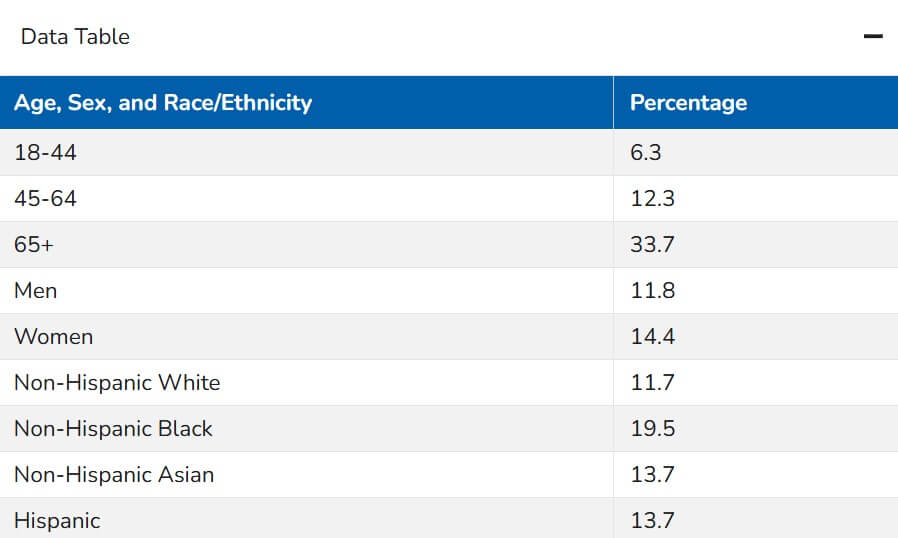

CKD by age, sex, and race/ethnicity

According to current estimates:

  • CKD is more common in people aged 65 years or older (34%) than in people aged 45–64 years (12%) or 18–44 years (6%).
  • CKD is slightly more common in women (14%) than men (12%).
  • CKD is more common in non-Hispanic Black adults (20%) than in non-Hispanic Asian adults (14%) or non-Hispanic White adults (12%).
  • About 14% of Hispanic adults have CKD


(Ref. CDC’s Chronic Kidney Disease in the US, 2023

Learn More about NKFM's Programs

HBP Control

Stock image of a woman taking her blood pressure at home.

High blood pressure can cause kidney damage and raise your risk for heart disease, stroke, vision loss, and other health concerns. HBP Control is a workshop that teaches you skills and tools to take control of your high blood pressure.

Cooking Matters at the Store

Cooking Matters logo

Cooking Matters at the Store is a free program of the No Kid Hungry campaign that empowers families to stretch their food budgets so their children get healthy meals at home.

PATH

Couple in the kitchen, man using a tablet

PATH helps people better manage their long-term health conditions by learning strategies to deal with pain, fatigue, difficult emotions, and more.

References
  1. Nicholas SB, Kalantar-Zadeh K, Norris KC. Racial disparities in kidney disease outcomes. Semin Nephrol. 2013;33(5):409-415.
  2. United States Census Bureau. (2021). QuickFacts Michigan. https://www.census.gov/quickfacts/MI
  3. United States Renal Data System, 2018 Annual Data Report: Epidemiology of Kidney Disease in the United States. National Institutes of Health, National Institute of Diabetes and Digestive and Kidney Diseases, Bethesda, MD, 20892. https://www.usrds.org/render/xquery_result.phtml. Accessed September 27, 2020
  4. Based on OPTN data as of September 16, 2020. https://optn.transplant.hrsa.gov. This work was supported in part by Health Resources and Services Administration contract 234-2005-37011C. The content is the responsibility of the authors alone and does not necessarily reflect the views or policies of the Department of Health and Human Services, nor does mention of trade names, commercial products, or organizations imply endorsement by the U.S. Government.
  5. Norton et al., 2016 2 Norton JM, Moxey-Mims MM, Eggers PW, et al. Social Determinants of Racial Disparities in CKD. J Am Soc Nephrol. 2016;27(9):2576-2595.
  6. Nicholas et al., 2015 3 Nicholas SB, Kalantar-Zadeh K, Norris KC. Socioeconomic disparities in chronic kidney disease. Adv Chronic Kidney Dis. 2015;22(1):6-15.